Debt recovery agencies face growing pressure to manage compliance across consumer communications, payment workflows, and regulatory documentation. Manual processes and disconnected systems make that challenge even harder as regulations continue to expand.
The global compliance software market is projected to reach $74.12 billion in 2031, reflecting rising demand for stronger compliance infrastructure. Many collection agencies now need centralized systems that improve visibility, documentation, and operational oversight.
An advanced compliance management system helps agencies standardize workflows and reduce compliance gaps across recovery operations. In this guide, you will learn how compliance management works in debt collections, key system features, implementation steps, and leading platforms used in 2026.
Compliance management in debt collections refers to the processes agencies use to follow legal, operational, and consumer protection requirements. It covers how agencies communicate with consumers, process payments, store records, manage disputes, and document collection activity.
Third-party collection agencies typically operate under multiple federal, state, and industry regulations, including:
As compliance obligations expand, agencies need structured systems. In the next section, we will examine what a compliance management system does in third-party debt recovery.
Suggested Read: 9 Benefits of Compliance-First Follow-Up Systems for Collection Agencies
A compliance management system helps third-party collection agencies monitor, document, and standardize recovery operations across teams and communication channels.
These systems centralize compliance-related workflows, helping agencies maintain oversight across consumer interactions, payment activity, dispute handling, and regulatory documentation.
Most compliance management systems for debt recovery focus on three core elements:
Tratta provides collection agencies with configurable workflows, audit-ready records, secure payment infrastructure, and communication management tools within a centralized platform. Its compliance-focused architecture helps agencies standardize recovery operations while maintaining visibility across collection activity. Schedule a free demo today.
In 2025, the CFPB received nearly 207,800 debt collection complaints, reflecting ongoing regulatory pressure across the industry. For third-party collection agencies, compliance failures can trigger lawsuits, enforcement actions, financial penalties, and licensing restrictions under federal and state laws.
Common statutory risks include:
The FDCPA allows consumers to recover actual damages, attorney fees, and statutory damages of up to $1,000 per action. The TCPA also allows consumers to recover $500 per violation and up to $1,500 for willful violations involving unauthorized calls or texts.
The FCRA allows consumers to pursue damages tied to inaccurate credit reporting, improper investigations, or unlawful access to consumer credit information.
State laws may create direct operational exposure for collection agencies. For example, New York City debt collection rules under 6 RCNY § 2-191 require agencies to maintain a valid license, and violations may result in civil penalties, license suspension, or revocation.
The CFPB and FTC may pursue consent orders, restitution requirements, operational monitoring, and civil monetary penalties after repeated compliance failures.
Agencies handling payment data may face contractual penalties, reputational damage, or payment processing restrictions after failing to meet PCI DSS security standards.
In the next section, we will examine how centralized compliance systems improve workflow consistency, audit readiness, and operational visibility across debt recovery teams.
Suggested Read: 5 Ways Agencies Use Automated Compliance Management Systems in 2026
By centralizing workflows, communication records, and audit documentation, agencies can reduce the risk of violations and penalties. These systems also help teams identify operational gaps earlier before they develop into larger regulatory or legal issues.
Additional operational benefits include:
As compliance responsibilities expand across departments, agencies increasingly rely on centralized technology platforms to improve visibility and workflow control. In the next section, we will compare several compliance management systems used in debt collection operations in 2026.
Suggested Read: 5 Best SOC 2 Compliant Debt Collection APIs Agencies Trust (2026 Picks)
Debt recovery agencies often evaluate compliance platforms based on workflow controls, audit readiness, communication oversight, and payment security capabilities. The right platform should support regulatory visibility without slowing down collection operations.
Below are three widely recognized platforms used in U.S. third-party debt recovery environments.
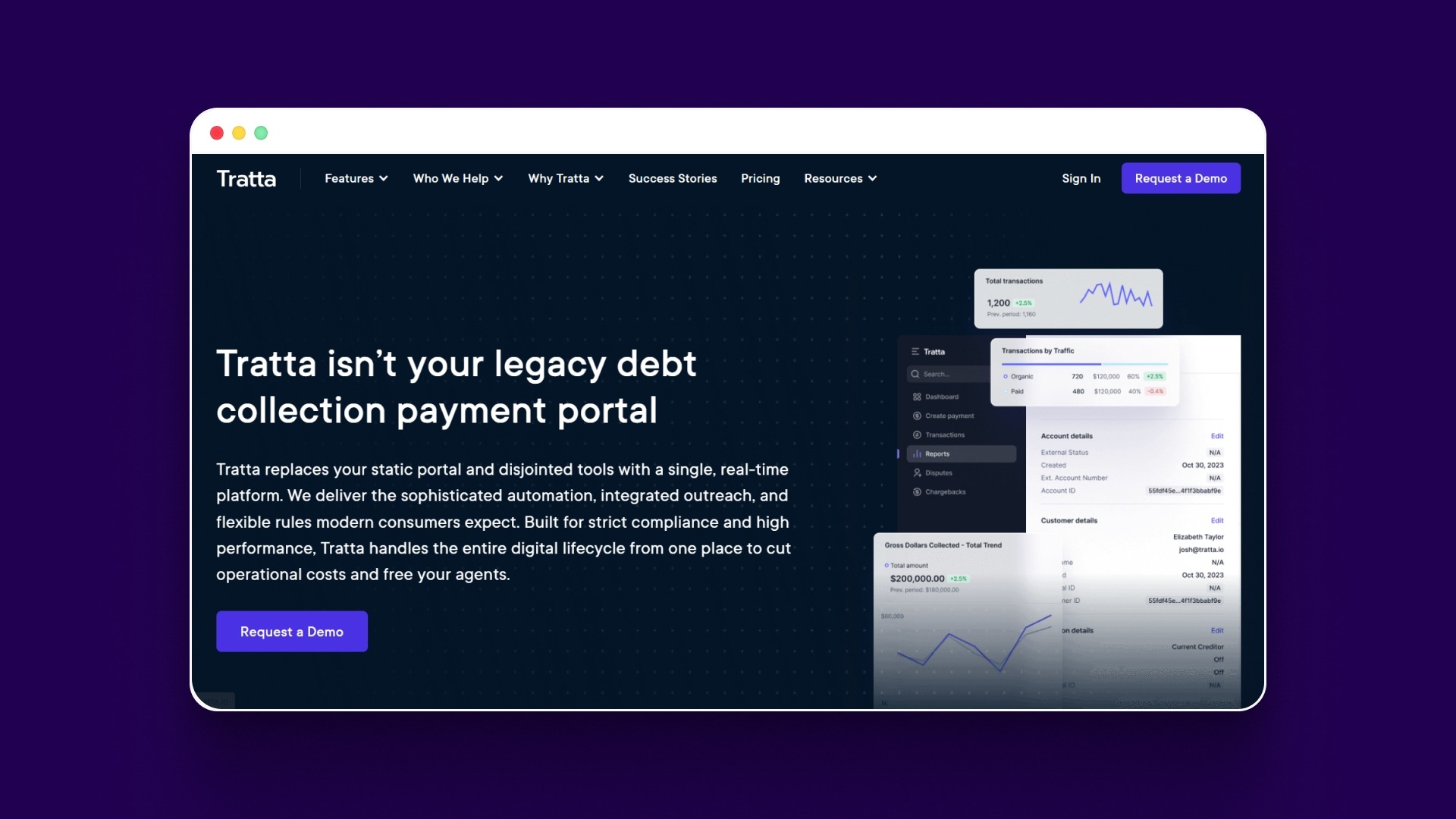
Tratta is a compliance-focused debt collection platform designed for third-party collection agencies and law firms. The platform emphasizes centralized workflow controls, secure payment handling, audit visibility, and configurable communication management.
Tratta also positions compliance directly within operational workflows through its compliance-by-code infrastructure.
Key compliance-related features include:
Unlike generalized compliance tools, Tratta embeds compliance controls directly into operational workflows through configurable automation, audit-ready activity tracking, and secure payment infrastructure. Contact us to learn more.
C&R Software Debt Manager is an enterprise collections and recovery platform used across banking, government, and third-party debt collection environments. The platform focuses heavily on configurable workflows, audit visibility, compliance monitoring, and large-scale recovery operations.
C&R also emphasizes real-time compliance checks and configurable rules management within its collections infrastructure.
The platform includes several compliance-focused capabilities:
Collect! is a debt collection software platform used by third-party collection agencies, attorneys, and recovery firms across the United States. The platform focuses on workflow automation, account management, payment processing, and compliance-related operational controls.
Collect! also supports configurable workflows that help agencies standardize collection activity across teams and portfolios.
The platform includes several compliance-focused capabilities:
You also need structured implementation plans that align workflows, teams, documentation practices, and operational controls across the organization. In the next section, we will examine the steps to build an effective compliance management framework for debt collections.
Implementing a compliance management system requires more than adding new software to existing operations. A phased implementation approach helps agencies reduce disruption while improving long-term compliance consistency.
Key implementation steps include:
Review communication workflows, dispute handling, payment processes, audit procedures, and documentation practices to identify operational risks.
Document the federal, state, client, and payment security requirements that apply to your recovery operations.
Create consistent procedures for disclosures, consumer communications, escalations, dispute resolution, and account documentation.
Store policies, communication records, audit logs, payment activity, and training records within accessible systems.
Limit system access based on operational responsibilities and the sensitivity of consumer information.
Conduct periodic reviews of communications, workflows, user activity, and documentation practices to identify compliance risks early.
Debt recovery requires structured planning processes that support ongoing oversight, accountability, and workflow consistency. In the next section, we will examine practical tips for creating a stronger compliance management plan for debt collection operations.
A well-designed framework improves accountability and supports more sustainable recovery operations as regulations evolve.
The following practices can help strengthen your compliance management plan:
Compliance management in debt collection requires continuous oversight across workflows, communications, documentation, and payment activity. The right compliance platform can help agencies maintain operational consistency while improving visibility across changing recovery and regulatory requirements.
Without a structured compliance management system, debt recovery agencies often face fragmented oversight, inconsistent documentation practices, and greater exposure to regulatory risk. As operational complexity increases, agencies need stronger workflow controls and centralized visibility across communications, payments, and audit processes.
Tratta provides configurable compliance workflows, audit-ready activity tracking, secure payment infrastructure, and centralized operational controls within a single platform. Its compliance-by-code architecture helps agencies standardize recovery operations while maintaining stronger oversight across collection activity.
If your agency is evaluating ways to strengthen compliance operations without adding more manual processes, the right platform can make a significant difference. Request a demo today.
The 5 C’s of compliance commonly refer to commitment, culture, communication, controls, and corrective action. In third-party debt collection, these principles help agencies maintain regulatory oversight across workflows, consumer interactions, and audit processes.
The four pillars typically include policies and procedures, compliance training, monitoring and auditing, and corrective action management. Collection agencies use these elements to manage operational consistency and regulatory oversight across recovery operations.
An example includes monitoring collector communications for FDCPA compliance, documenting consumer disputes, restricting user access to payment information, and maintaining audit-ready records within a centralized platform.
Most compliance programs include risk assessment, policy development, employee training, communication controls, monitoring and audits, corrective action procedures, and ongoing policy reviews to address changing regulations.
A compliance management system helps agencies standardize workflows, improve audit visibility, manage consumer communication oversight, and reduce operational risks tied to FDCPA, TCPA, FCRA, and state-level regulations.