Top 8 Healthcare Debt Collection Software Platforms for Agencies in 2026
Debt Collection & Recovery Software
Top 8 Healthcare Debt Collection Software Platforms for Agencies in 2026
Published on:
May 18, 2026
Recovering healthcare debt has become more difficult for collection agencies that balance compliance, patient communication, payment flexibility, and operational efficiency. As medical accounts grow more complex, outdated recovery systems can slow workflows, increase compliance risk, and frustrate consumers.
The pressure is only increasing, with the global Medical Debt Collection Service market projected to expand at a CAGR of 3.3% from 2025 to 2033. If your agency handles healthcare recovery, choosing the right platform matters more than ever.
In this article, we cover the top 8 healthcare debt collection software platforms for agencies in 2026, including their core features, strengths, and what makes them suitable for third-party medical recovery operations.
Quick look:
Healthcare recovery operations require specialized collection software that supports compliance, automation, payment flexibility, and omnichannel communication across medical debt portfolios.
Top platforms compared in this list include Tratta, Finvi, C&R Software, Latitude by Genesys, CollectOne, InterProse ACE, Quantrax RMEx, and Collect!.
Tratta stands out for healthcare-focused workflows, self-service payments, omnichannel engagement, and strong consumer payment accessibility features.
Enterprise-focused platforms like Finvi, C&R Software, and Latitude by Genesys offer deeper workflow orchestration and large-scale operational management capabilities.
Smaller and mid-sized agencies may benefit from platforms like CollectOne, InterProse ACE, Quantrax RMEx, or Collect!, depending on workflow complexity and communication needs.
Standout Features in Healthcare Debt Collection Platforms
Healthcare debt collection software helps agencies manage medical debt recovery workflows more efficiently. These platforms support compliant communication, payment management, consumer engagement, and operational oversight across healthcare collection accounts.
They are commonly used by healthcare collection agencies and recovery law firms that handle high-volume accounts and compliance-sensitive recovery activity.
The most effective healthcare debt collection platforms typically include features such as:
Compliance Management: Tools supporting HIPAA, FDCPA, Reg F, TCPA, and communication consent requirements.
Self-Service Payment Portals: Consumer-facing portals for payments, settlements, and repayment plan management.
Omnichannel Communication: SMS, email, phone, voicemail, and digital outreach from a centralized system.
Workflow Automation: Automated campaigns, account routing, task management, and communication scheduling.
Payment Flexibility: Support for recurring payments, partial settlements, and customized repayment arrangements.
Reporting and Analytics: Visibility into recovery performance, consumer engagement, and operational trends.
Integration Capabilities: API connectivity with healthcare recovery systems and agency collection infrastructure.
Data Security Controls: Secure handling of healthcare-related consumer and account information.
Choosing the right platform depends on operational goals, compliance requirements, and healthcare recovery complexity. In the next section, we examine how these healthcare debt collection software platforms were evaluated.
How Were These Healthcare Debt Collection Software Platforms Evaluated
Healthcare debt recovery requires specialized operational and compliance capabilities. Third-party agencies need platforms that support secure communication, workflow automation, consumer payment flexibility, and healthcare-focused recovery management.
To create this list, we evaluated each platform using the following criteria:
Evaluation Criteria
Weightage
What Was Assessed
Compliance and Security
30%
HIPAA, FDCPA, Reg F, TCPA, audit tracking, and secure data handling
Healthcare Recovery Features
25%
Medical debt recovery workflows and healthcare collection functionality
Automation and Communication
20%
Omnichannel outreach, workflow automation, and campaign management
Consumer Payment Experience
15%
Self-service portals, payment plans, and settlement management
Reporting and Scalability
10%
Analytics, operational visibility, integrations, and scalability
Each platform offers different strengths for healthcare recovery operations. In the next section, we review the leading software platforms for third-party healthcare collections.
Best Healthcare Debt Collection Software for Third-Party Agencies
Third-party agencies often manage complex account structures, compliance-sensitive communication workflows, and growing consumer expectations around digital payments and accessibility. The right software can improve operational visibility, streamline recovery activity, and support more consistent consumer engagement across healthcare portfolios.
Here is a quick comparison of the platforms covered in this list:
Platform
Best For
Key Differentiator
Notable Limitation
Tratta
Consumer-focused medical debt recovery
Omnichannel engagement, self-service payments, and healthcare-focused recovery workflows
May offer more functionality than smaller agencies require
Velosidy
Enterprise healthcare outsourcing environments
Enterprise automation and medical debt workflow configurations
Implementation may require significant operational planning
Debt Manager
Highly structured recovery operations
Advanced workflow orchestration and compliance management
Greater configuration complexity than lighter platforms
Latitude
Communication-heavy collection environments
Deep contact center and outbound engagement integration
Healthcare-specific functionality may require additional customization
CollectOne
Multi-client medical debt portfolio management
Flexible client segmentation and payment management workflows
Less advanced omnichannel automation capabilities
InterProse ACE
Customized healthcare recovery programs
AI-assisted workflow customization and modular platform structure
Consumer engagement tools are less communication-centric
Quantrax RMEx
High-volume outbound recovery operations
Predictive dialing, AI-driven automation, and compliance controls
User experience may feel dense for smaller teams
Collect!
Flexible and lower-overhead recovery operations
Configurable deployment and operational simplicity
Limited enterprise-scale automation and analytics depth
Below, we break down each healthcare debt collection platform, including its strengths, core capabilities, and ideal use cases for third-party recovery operations.
1. Tratta
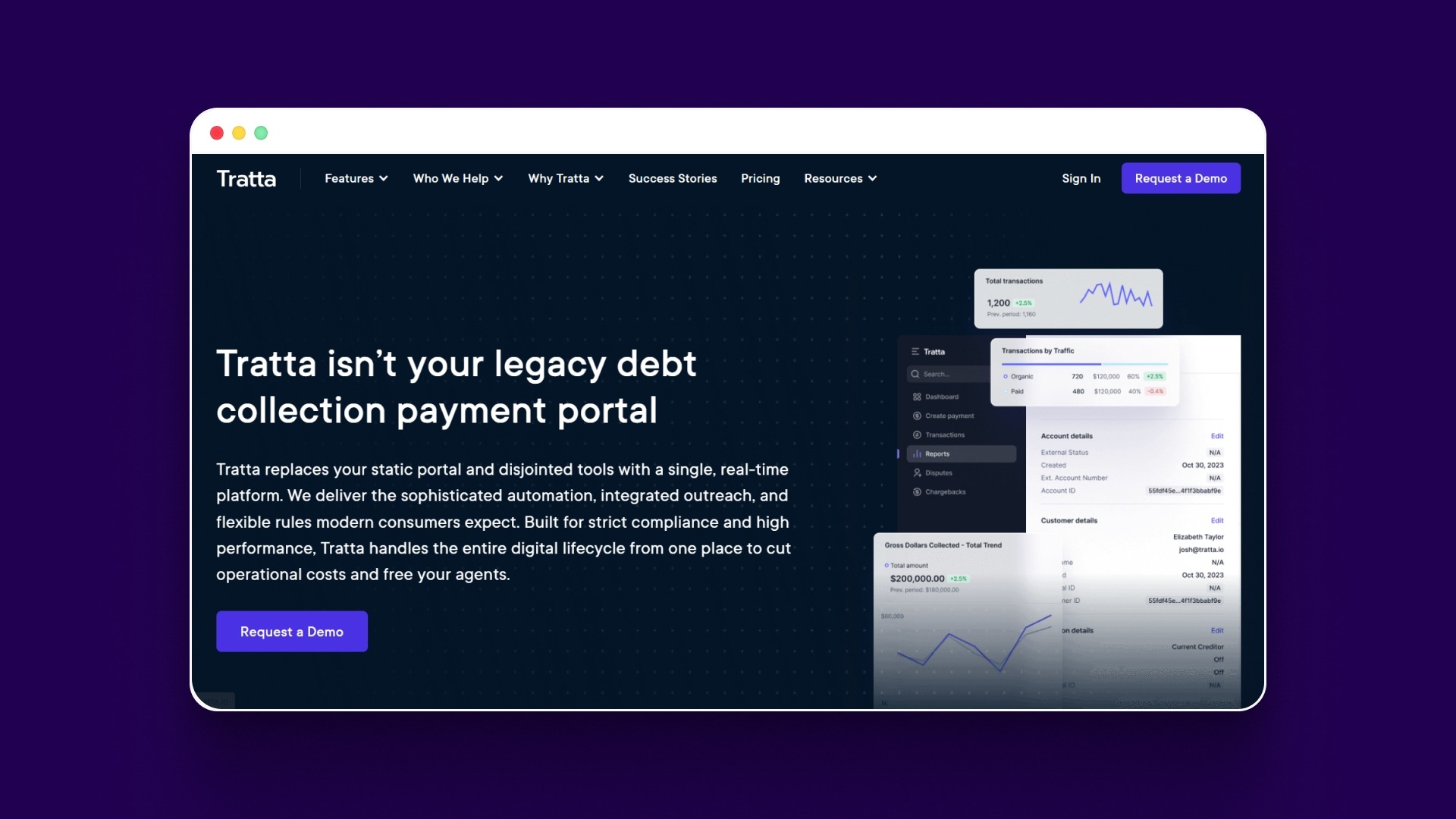
Tratta is a cloud-based recovery platform built for third-party collection agencies and recovery law firms. The platform combines consumer payments, omnichannel engagement, automation, compliance controls, and analytics within a single system.
Its healthcare-focused capabilities support agencies handling complex medical debt portfolios, fragmented account structures, and compliance-sensitive consumer interactions.
Strengths:
Strong self-service payment and settlement workflows
Advanced omnichannel outreach automation
Flexible handling of complex medical account structures
Core Features:
Consumer Self-Service Payment Portal: Consumers can verify accounts, review balances, access documents, submit disputes, and manage payment plans independently.
Payments and Merchant Services: Agencies can support full payments, recurring plans, settlements, and configurable repayment arrangements across medical debt portfolios.
Multilingual Payment IVR: Consumers can complete payments and manage repayment activity through bilingual automated voice workflows.
Omnichannel Communications: Agencies can coordinate SMS, email, phone, chat, QR-code messages, and automated outreach from a single platform.
Reporting and Analytics: Real-time dashboards track payment activity, settlements, campaign engagement, reversals, and operational recovery performance.
Ideal Use Case:
Tratta fits third-party healthcare collection agencies managing high account volumes and digitally engaged consumers. The platform works especially well for agencies prioritizing automation, payment flexibility, and compliant omnichannel communication.
2. Velosidy
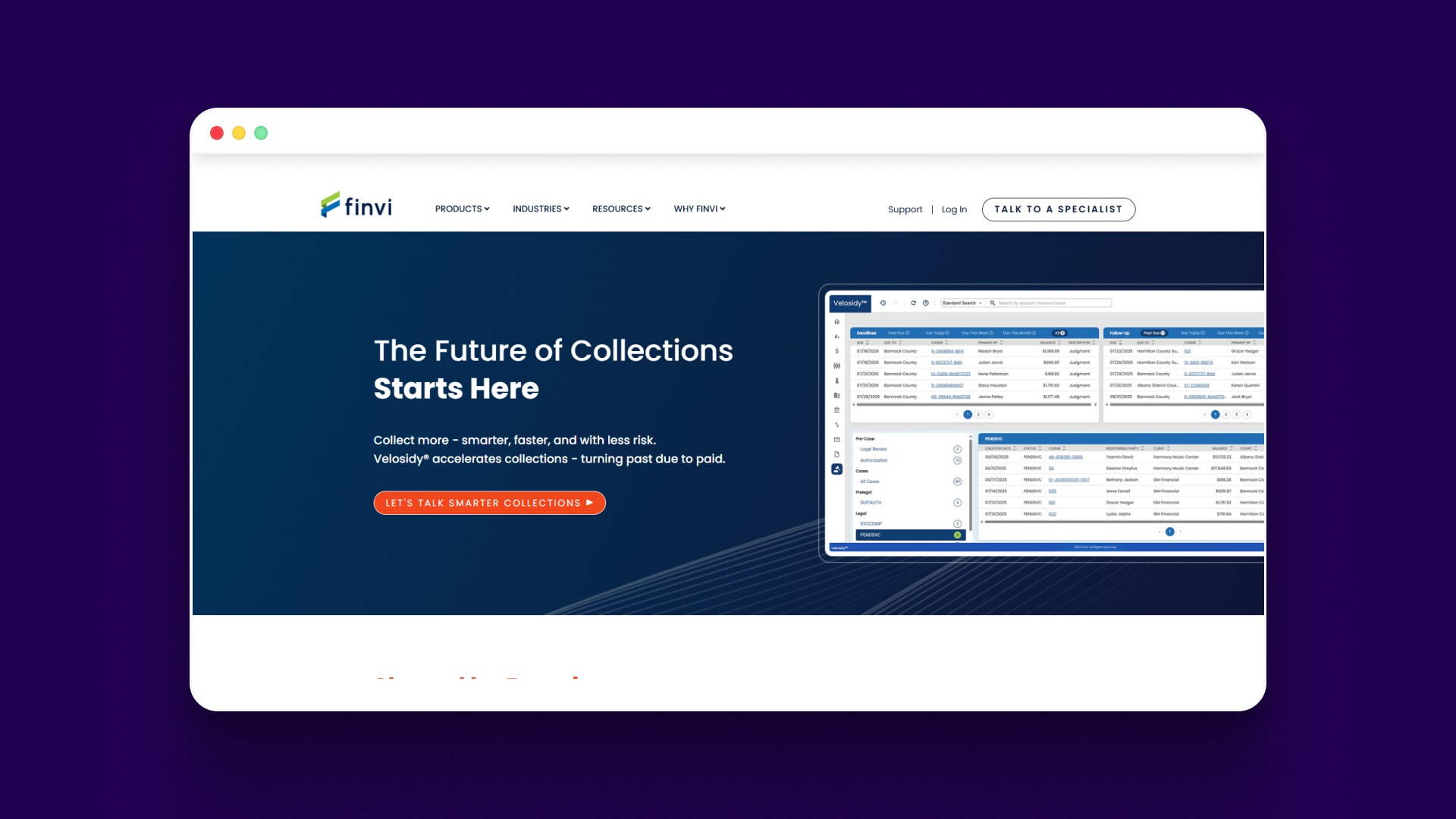
Velosidy by Finvi provides recovery technology for third-party collection agencies, healthcare outsourcers, and ARM operations. Its Velosidy platform focuses on workflow automation, digital engagement, analytics, and enterprise-scale recovery management.
The platform also includes medical debt collection enhancements designed for agencies handling compliance-sensitive healthcare portfolios.
Strengths:
Strong enterprise workflow automation
Established healthcare outsourcing support
Scalable infrastructure for large recovery environments
Core Features:
Digital Engagement Tools: Agencies can manage SMS, email, web, and self-service communication from centralized recovery workflows.
Configurable Workflow Automation: Automated account routing, task scheduling, and recovery sequencing help agencies streamline collection activity.
Medical Debt Workflow Configurations: The platform includes healthcare-focused workflow tools, account screens, and operational configurations for medical debt recovery.
Advanced Analytics and Reporting: Agencies can monitor operational performance, account trends, consumer engagement, and medical debt recovery metrics through configurable dashboards.
Enhanced Record Maintenance and Auditing: Agencies can track account activity, documentation changes, and audit workflows across healthcare recovery operations.
Ideal Use Case:
Finvi works well for enterprise third-party agencies managing large and operationally complex medical debt portfolios. The platform is especially useful for agencies prioritizing automation, scalability, and healthcare-focused workflow management.
3. Debt Manager
Debt Manager by C&R Software is a debt collection and recovery technology for third-party collection agencies and enterprise recovery operations. The platform focuses on workflow orchestration, compliance management, automation, and account lifecycle control. It is widely used in regulated collection environments requiring configurable recovery strategies and detailed operational oversight.
Strengths:
Advanced workflow customization capabilities
Strong compliance and audit management
Built for large recovery environments
Core Features:
Strategy and Workflow Automation: Agencies can automate account segmentation, communication paths, and recovery workflows across medical debt portfolios.
Compliance and Audit Tracking: The platform supports documentation controls, activity histories, communication governance, and audit visibility.
Case and Account Management: Agencies can manage complex account inventories, legal workflows, and multi-client recovery operations from centralized dashboards.
Performance Reporting and Analytics: Real-time analytics help agencies track collector performance, recovery activity, and operational efficiency.
Scalable Recovery Infrastructure: Debt Manager supports high account volumes, distributed teams, and configurable operational structures.
Ideal Use Case:
The platform works especially well for organizations managing layered recovery processes, legal collections, or highly structured compliance workflows. Agencies seeking a simpler interface or faster deployment may prefer lighter platforms.
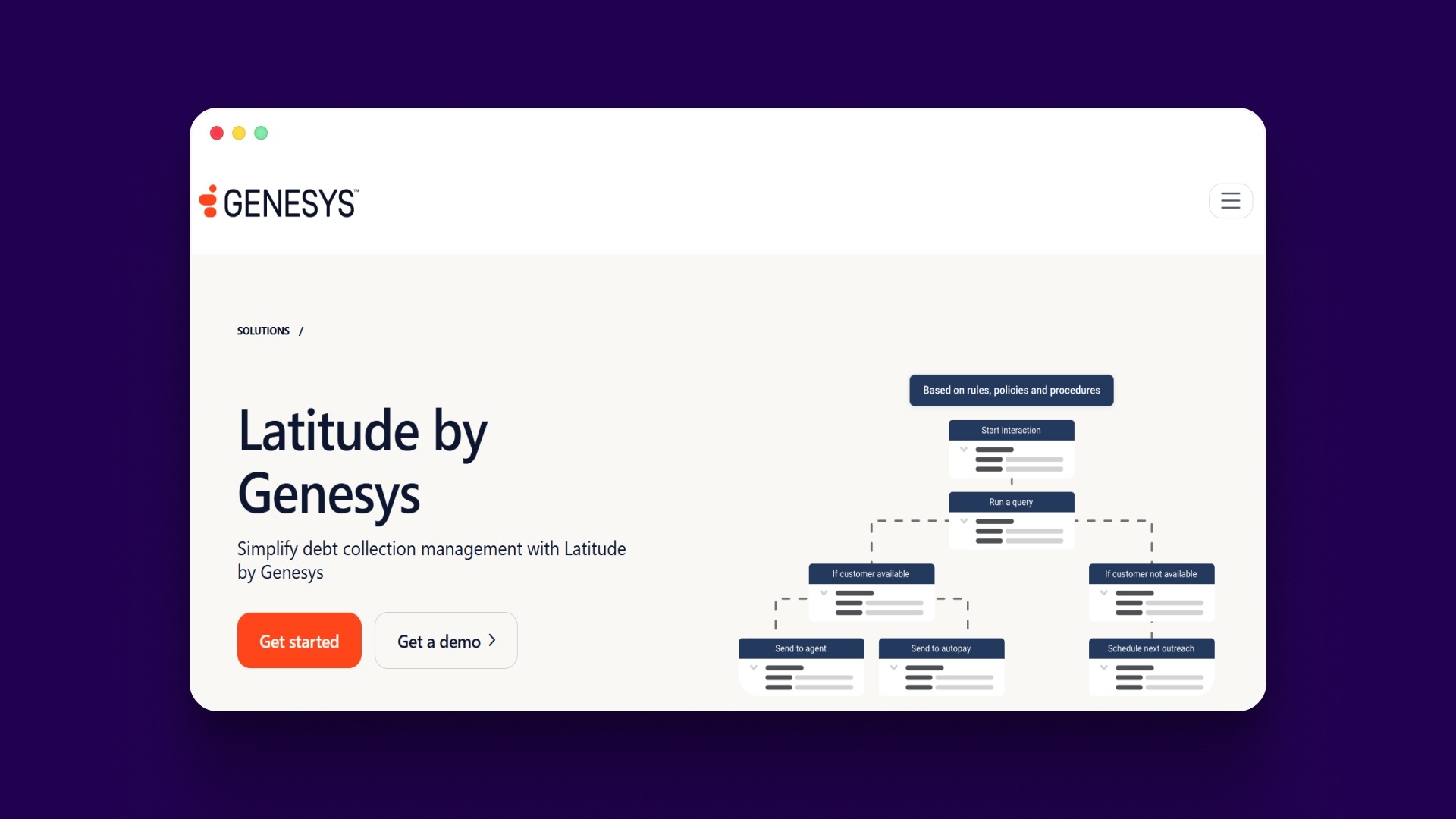
4. Latitude
Latitude by Genesys is a recovery management platform designed for third-party collection agencies and ARM operations. The platform combines collections workflows, account management, communication tools, and payment handling within a centralized environment.
Strengths:
Advanced contact center integration
Strong communication workflow orchestration
Flexible account assignment and segmentation tools
Core Features:
Account Assignment and Segmentation: Agencies can automate account distribution, queue management, and workflow prioritization across recovery teams.
Email, SMS, IVR, and Live Agent Management: The platform supports coordinated outreach across multiple communication channels from one environment.
Business Process Automation: Agencies can create automated workflow rules, exception handling paths, and collection strategies for medical debt portfolios.
Unified Collector Desktop: Collectors can access account data, communication activity, and recovery workflows from a centralized interface.
Compliance Monitoring and Follow-Up Controls: The platform helps agencies maintain consistent account treatment through automated monitoring and communication tracking.
Ideal Use Case:
Agencies seeking lightweight deployment or highly healthcare-specialized tooling may prefer more focused recovery platforms. Latitude works best for agencies operating large outbound recovery teams with communication-heavy collection strategies.
5. CollectOne
CollectOne is a collection management platform built for third-party collection agencies and recovery operations. The platform focuses on account management, payment processing, workflow configuration, and operational reporting across agency environments. It is widely used by agencies handling medical debt portfolios and multi-client recovery programs.
Strengths:
Longstanding presence in medical debt collections
Flexible client and portfolio management
Strong payment and account tracking tools
Core Features:
Client and Inventory Segmentation: Agencies can organize medical debt accounts by client, inventory type, balance category, and recovery strategy.
Integrated Payment Management: The platform supports recurring payments, settlements, payment arrangements, and transaction tracking within recovery workflows.
Custom Workflow Configuration: Agencies can configure account handling rules, collector actions, communication timing, and escalation paths.
Collector Workstation Tools: Collectors can manage notes, disputes, follow-ups, promises-to-pay, and account activity from centralized interfaces.
Operational Reporting and Dashboards: Supervisors can monitor liquidation performance, collector productivity, payment activity, and portfolio trends.
Ideal Use Case:
CollectOne works well for agencies needing flexible portfolio management across multiple healthcare recovery clients. The platform is especially useful for organizations prioritizing payment tracking and configurable account workflows.
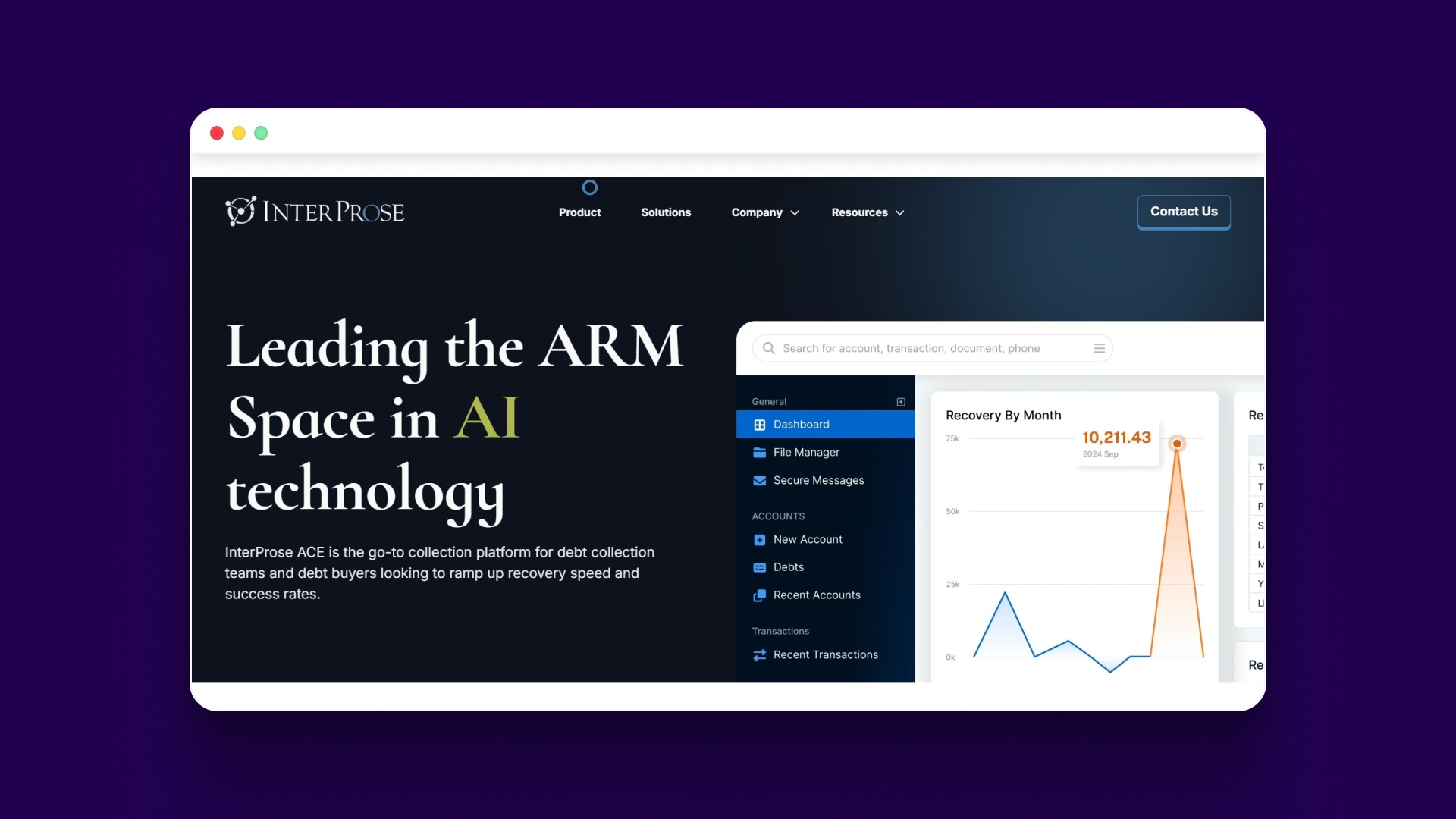
6. InterProse ACE
InterProse ACE is an ARM platform built for third-party collection agencies managing complex recovery operations. The platform is known for its high configurability, automation flexibility, and AI-assisted workflow capabilities. Its modular design makes it useful for agencies handling varied medical debt portfolios with different client rules, account structures, and recovery strategies.
Strengths:
Highly configurable workflow environment
AI-assisted account and collector management tools
Strong customization across healthcare recovery programs
Core Features:
ACE AI Workflow Assistance: The platform uses AI-driven tools to help agencies prioritize accounts, streamline collector workflows, and improve operational efficiency.
Rules-Based Recovery Automation: Agencies can automate account routing, follow-up scheduling, escalation paths, and communication timing across medical debt inventories.
Custom Client Workflow Management: The platform allows agencies to configure separate recovery processes, business rules, and account handling paths for different healthcare clients.
Integrated Consumer Payment Tracking: Agencies can monitor settlements, recurring payments, payment arrangements, and account activity within centralized workflows.
Dynamic Reporting and Data Visibility: Supervisors can generate operational reports, recovery trend analysis, and collector performance insights across portfolios.
Ideal Use Case:
InterProse ACE works well for agencies managing multiple healthcare recovery programs with different operational requirements. The platform is especially useful for organizations needing deep workflow customization and configurable automation without enterprise-level complexity.
7. Quantrax RMEx
Quantrax RMEx is a recovery management platform built for third-party collection agencies, debt buyers, and recovery firms. The platform differentiates itself through AI-driven automation, predictive dialing, compliance controls, and deeply configurable workflow logic.
Strengths:
Advanced AI-driven collection automation
Strong predictive dialing and call management
Deep compliance and workflow controls
Core Features:
AI-Driven Account Prioritization: RMEx uses AI and rules-based logic to prioritize accounts, automate decisions, and optimize collector workflows.
Integrated Predictive Dialer and IVR: Agencies can manage outbound campaigns, inbound calls, voicemail workflows, and automated payment interactions from one environment.
Guaranteed Compliance Controls: The platform applies configurable business rules to help agencies maintain FDCPA, TCPA, and communication compliance requirements.
Smart Code Customization System: Agencies can configure workflows, collector screens, account handling paths, and operational rules without extensive development work.
Real-Time Monitoring and Analytics: Supervisors can monitor collector activity, dialing performance, recovery trends, and operational metrics through centralized reporting tools.
Ideal Use Case:
Quantrax RMEx works well for agencies running high-volume outbound medical debt recovery operations. The platform is especially useful for organizations prioritizing predictive dialing, automation, and strict compliance management.
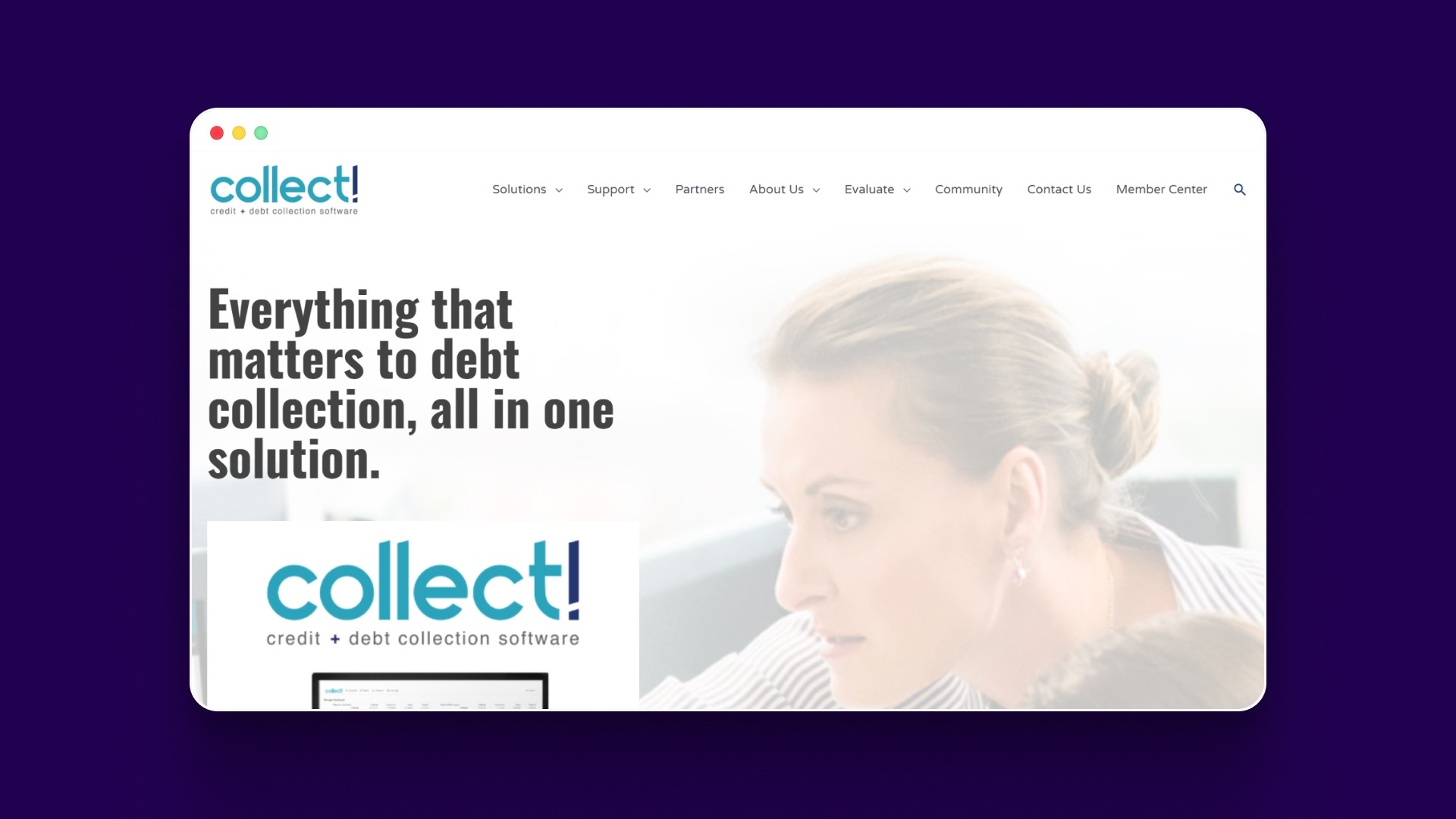
8. Collect!
Collect! is a debt collection software platform built for third-party collection agencies and recovery firms. The platform differentiates itself through deployment flexibility, extensive customization options, and lower infrastructure requirements than many enterprise recovery systems.
Strengths:
Flexible on-premise and cloud deployment options
Highly customizable collector workflows
Lower operational complexity for smaller agencies
Core Features:
Customizable Recovery Workflows: Agencies can configure collection stages, account handling rules, and medical debt recovery processes around operational preferences.
Integrated Payment Management: The platform supports settlements, payment arrangements, recurring payments, and transaction tracking across recovery inventories.
Built-In Letter and Notice Generation: Agencies can create collection letters, account notices, and consumer correspondence directly within workflow processes.
Collector Productivity Tools: Collectors can manage follow-ups, disputes, callbacks, account notes, and repayment activity from centralized workstations.
Flexible Deployment Infrastructure: Agencies can choose cloud-based or on-premise deployment depending on compliance, operational, or infrastructure requirements.
Ideal Use Case:
Collect! works well for small and mid-sized agencies wanting configurable recovery software without enterprise-level implementation complexity. Its modular structure makes it a practical option for agencies managing medical debt portfolios alongside broader consumer recovery operations.
In the next section, we examine how healthcare-focused collection software can improve medical debt recovery performance and operational efficiency.
Improved Consumer Engagement: Omnichannel communication and self-service payments create more accessible repayment experiences.
Greater Payment Flexibility: Agencies can offer recurring plans, settlements, and digital payment options across recovery operations.
Stronger Operational Visibility: Real-time dashboards help supervisors monitor collector performance, recovery trends, and portfolio activity.
Choosing the right platform depends on your agency’s communication strategy, compliance priorities, operational complexity, and recovery goals. Agencies should also evaluate how well a platform supports long-term scalability, workflow flexibility, and consumer engagement expectations across medical debt portfolios.
Conclusion
Outdated recovery systems can create operational bottlenecks, inconsistent communication workflows, compliance exposure, and poor consumer payment experiences. These issues can reduce recovery efficiency and make medical debt portfolios harder to manage at scale for third-party agencies.
Tratta stands out for combining omnichannel communication, self-service payments, workflow automation, compliance-focused infrastructure, and healthcare recovery flexibility on a single platform. Its healthcare-focused capabilities make it a strong fit for agencies managing complex medical debt portfolios while prioritizing operational visibility and consumer engagement.
Looking for a healthcare debt collection platform built for advanced recovery operations? Schedule a free demo today.
Frequently Asked Questions
1. What compliance features should healthcare debt collection software include?
Healthcare debt collection software should support HIPAA, FDCPA, Reg F, TCPA, audit tracking, communication controls, and secure consumer data handling.
2. Can healthcare debt collection software support payment plans and settlements?
Yes. Most modern platforms support recurring payments, settlements, self-service repayment plans, and digital payment processing workflows.
3. Why do third-party agencies need healthcare-focused collection software?
Medical debt recovery often involves complex account structures, sensitive consumer communication, and stricter compliance requirements than standard collections.
4. What is omnichannel communication in medical debt recovery?
Omnichannel communication allows agencies to engage consumers across SMS, email, phone, IVR, chat, and digital payment channels from one platform.
5. How does automation improve medical debt recovery operations?
Automation helps agencies reduce manual workflows, improve account routing, streamline communication scheduling, and increase operational efficiency.
Note: This information is not legal advice. Tratta recommends that you consult with your legal counsel to make sure that you comply with applicable laws in connection with your collection and outreach activities.
Sign up for our monthly newsletter
Debt collection insights that keep you compliant and competitive.
Thank you! Your submission has been received!
Oops! Something went wrong while submitting the form.